Key takeaways
- A slab leak is a pressurized line leaking beneath a concrete floor; signs include a warm or damp spot, water at a crack or wall base, and a rising bill.
- Acoustic locating works through concrete, so the slab is opened only at the pinpointed spot.
- Repeated slab leaks on the same line usually mean re-routing the supply rather than opening the floor again.
What a slab leak is
Some homes and most commercial buildings have water lines running under or within the concrete slab floor. When one of those lines fails, the water has nowhere to go but into the soil under the slab and, eventually, up through cracks and joints or along the base of walls. In a commercial lower level it often shows as a hallway or utility room that is always wet with no fixture nearby. In a house it's a warm spot on the floor from a hot line, a damp patch, a musty smell, or a bill that climbs.
Locating through concrete
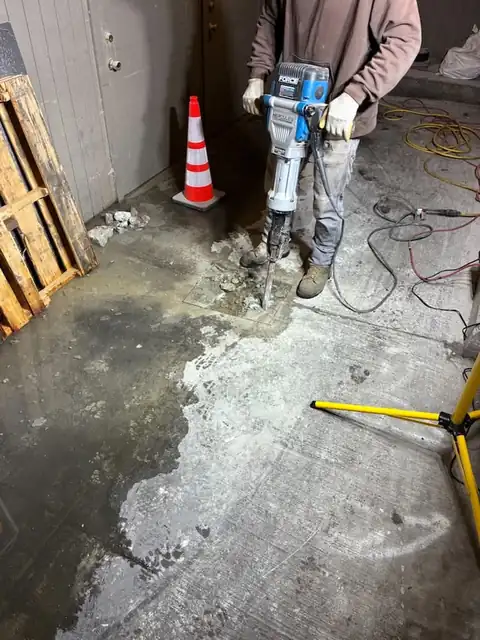
The method is the same as for a buried yard line: confirm the loss at the meter, trace the line's route under the slab where possible, and listen with the acoustic ground microphone. Concrete actually transmits leak noise well, and with the line pressurized the technician can usually find the peak signal clearly. The spot is marked, and the slab is cut and broken out there with a demolition hammer, only there.
Repair or re-route
Once the line is exposed, the failed section can be repaired and the slab patched. But a slab line that has failed once, especially older copper or galvanized, tends to fail again, and every failure means opening the floor. For those, re-routing the supply above the slab or through a new buried line outside the building often costs less over a few years and keeps the floor intact. A good contractor lays both options out with the pipe in front of you.
Commercial considerations
On a commercial property the work has to happen around tenants and operations: cones, lights, dust control, after-hours scheduling, and a written report with photos for the owner or insurer. The locating discipline matters even more because every exploratory hole is a saw cut in a floor people walk on.
Written by the crew at 360 Leak Finders
We locate, excavate and repair buried water lines and exterior drains across Kitsap County, 24 hours a day. If this guide raised a question about your property, call (206) 354-9906.