- Home
- Commercial
- Commercial Site Drainage & Storm Line Repair
Commercial Site Drainage & Storm Line Repair
Catch basins, parking lot drains, storm lines, French drains and footing drains on commercial and multi-family sites, diagnosed and rebuilt so water goes where it's supposed to.
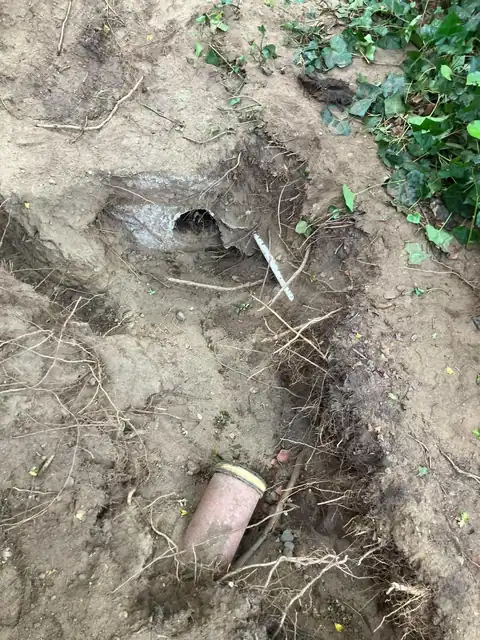
Commercial sites in Kitsap County generate a lot of runoff from roofs and pavement, and the private storm system that handles it, catch basins, parking lot drains, buried storm lines, the French drains behind retaining walls and the footing drains around each building, was installed when the site was built and has been silting, crushing and separating ever since. When it fails, water ponds in a parking lot, backs up at a catch basin, undermines a sidewalk, or ends up in a lower level or a crawlspace.
We diagnose it the way drains have to be diagnosed, since there's no pressure to listen for: trace the lines, flow-test from the inlets to the outlets, probe for soft zones, and open a test pit at the suspect point. Then we dig out the failed run and rebuild it on a true grade with the right pipe, rebuild or reset the catch basins and cleanouts, and get the system to a working outlet. French drains behind walls and footing drains around buildings get rebuilt with filter fabric and clean rock so they keep working for decades instead of a few years.
Exterior drainage work in Washington is excavation work, and it's a core part of what we do. On a commercial site we secure the work area, keep drive aisles open where we can, and restore asphalt, concrete and landscape behind us. For a property manager with a chronically wet corner of the lot or a building with a wet lower level, we'll find the cause and fix that, rather than pumping the symptom.
When a property needs this
- A parking lot or drive aisle that ponds after every rain
- A catch basin that fills and never drains
- A sidewalk, curb or wall undermined by water
- A building lower level or crawlspace wet after storms
- A French drain behind a retaining wall that stopped working
- A storm line collapsed by vehicle loads
How the job runs
- Trace and test. Inlets, lines and outlets traced; flow tested from inlet to outlet to find where the water stops.
- Probe and pit. Soft zones probed and a test pit opened at the suspect point to confirm the failure.
- Excavate. The failed run dug out with the site secured and drive aisles kept open where possible.
- Rebuild. New pipe on grade, catch basins and cleanouts reset, French and footing drains rebuilt with fabric and clean rock, outlet confirmed.
- Restore. Compacted backfill and asphalt, concrete or landscape restored.
What the owner or board receives
- Diagnosis of the failed component
- Rebuilt drains, basins and lines on a working grade to an outlet
- Written description with photos
- Site restored
What shapes the scope
- Length and depth of the failed run
- Surface over the work: asphalt, concrete, landscape
- Outlet location and condition
- Working hours and access
Commercial work, as it actually looks
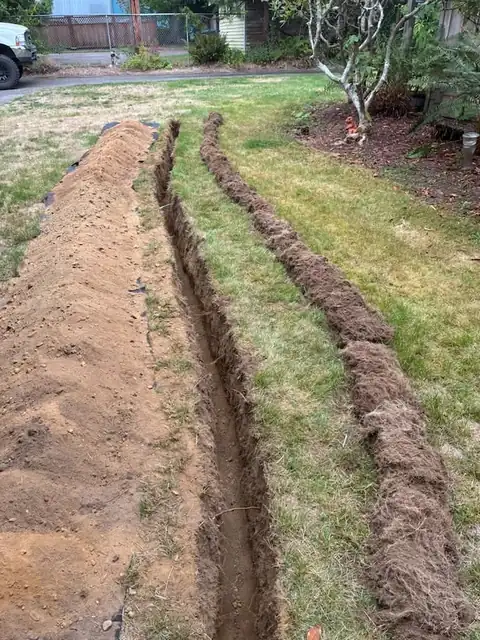
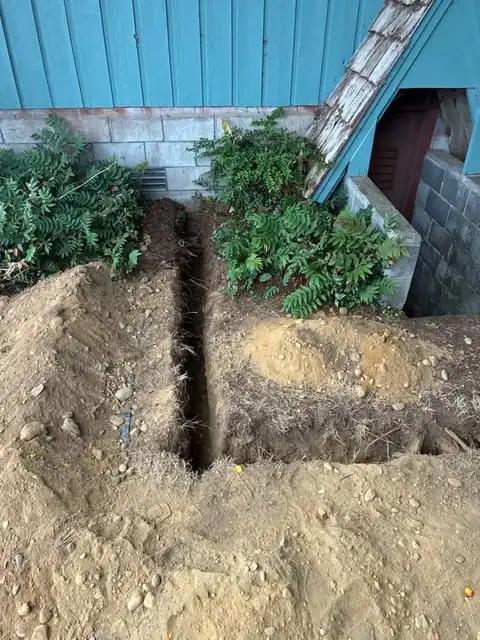
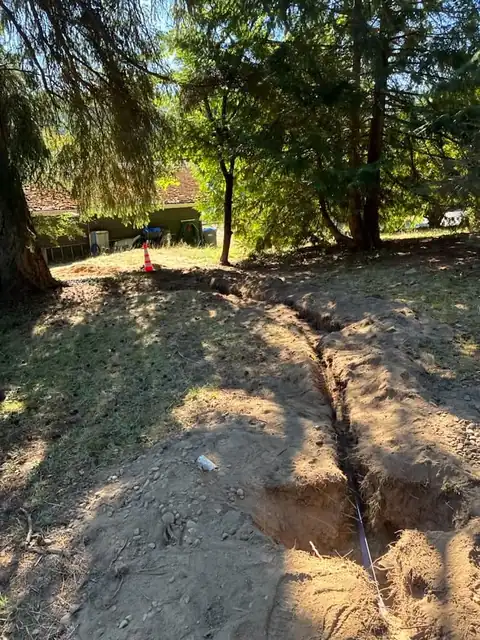
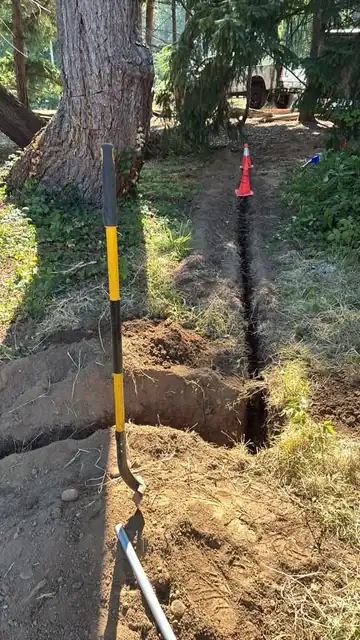
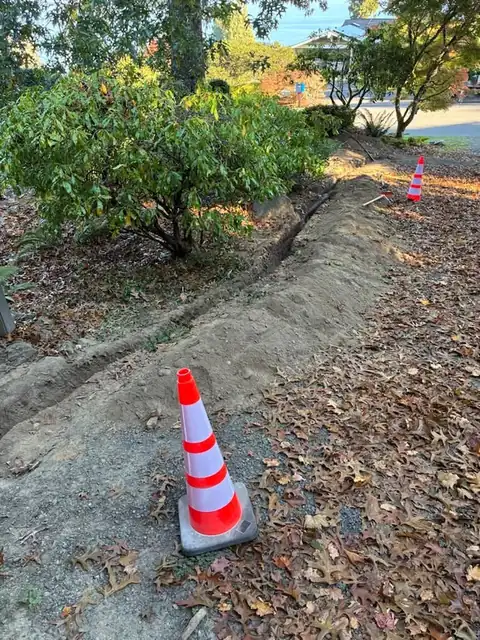
Commercial Site Drainage & Storm Line Repair across the peninsula
Bremerton
The shipyard city's older galvanized lines fail quietly and show up as a wet lawn or a water bill nobody can explain.
Silverdale
The 1980s and 90s subdivision boom around the mall left thousands of polybutylene service lines that are now failing on schedule.
Port Orchard
The county seat's hillside lots and clay soils turn small leaks into slope problems, and long rural runs hide breaks for months.
Poulsbo
Little Norway's mix of century-old downtown lines and fast-draining bay-side outwash means leaks hide well and fail suddenly.
Bainbridge Island
Clay soils and 500-foot driveways make island leaks slow to surface and expensive to guess at, which is why we locate before we dig.
Kingston
Ferry-town acreage with long wooded service runs where a leak can hide under hardpan for an entire winter.
Keyport
A century-old Navy village with short lots, old lines and shoreline clay that keeps everything damp.
Tracyton
Bluff-side lots over Dyes Inlet where seeps and springs make it easy to mistake groundwater for a leak and vice versa.
Hansville
Beach cabins at the tip of the peninsula with shallow lines, high water tables and a long drive for anyone who isn't already in Kitsap.
Indianola
A century-old summer colony where shared lines, easements and bluff clay make leaks a neighborhood puzzle.
Suquamish
Two utilities, mixed-era housing and Agate Pass shoreline clay in the heart of the Port Madison reservation.
Manchester
Rich Passage waterfront lots where the service line runs downhill and every leak finds the beach.
Enetai
East Bremerton's bluff-side neighborhood where mid-century copper lines fail on slopes that drain toward the bay.
Lofall
Rural acreage between Poulsbo and the Hood Canal Bridge where well lines run hundreds of feet through hardpan.
Olalla
Well country at the south end of Kitsap where a leaking line shows up as a pump that won't shut off.
Seabeck
Hood Canal forest parcels where boulders, hardpan and long well lines make guessing at a leak an expensive mistake.
East Port Orchard
South Kitsap's 1970s and 80s subdivisions where copper and poly lines are reaching the end of their run.
Rollingbay
The northeast corner of Bainbridge where clay slopes, long drives and small community systems keep leaks hidden for seasons.
Port Townsend
A Victorian seaport where 1890s service lines sit under historic sidewalks and the gravity pipeline from the Quilcene delivers the water.
Commercial Site Drainage & Storm Line Repair: questions
Can you jet a clogged storm line instead?
Something underground isn't right?
We answer 24 hours a day. We locate before we dig, and we handle the whole job with our own crew and equipment.