Interior Water Leak Detection
Pinpointing leaks on the supply lines inside the house: in walls, ceilings, crawlspaces and under slabs, without opening finishes on a guess.
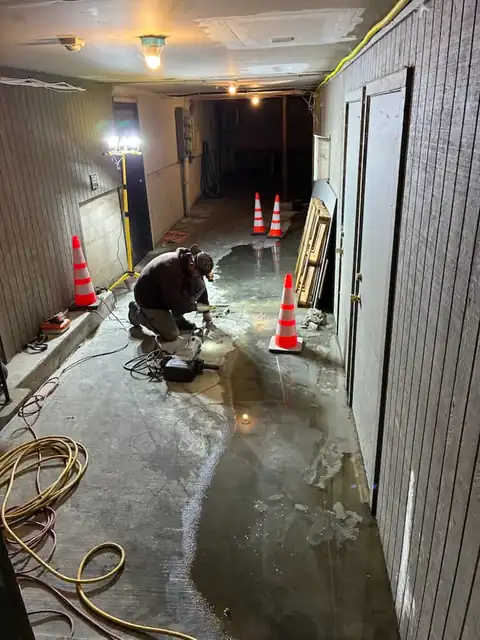
Not every leak is in the yard. Once the service line comes through the foundation it becomes the house's supply system: a trunk line in the crawlspace or under the slab, branches up through the walls to every fixture, and hot and cold runs that have been cut, moved and extended through every remodel the house has had. When one of those lines fails, the water goes into a wall cavity, a ceiling, the crawlspace soil or the slab subgrade, and it can run for a long time before anyone sees a stain.
We find interior leaks the way we find exterior ones: with instruments, before anyone opens a wall. The meter test with the house isolated tells us whether the loss is on the private service line outside or on the supply system inside. From there we isolate hot from cold at the water heater, branch from branch where there are valves, and listen along the lines with acoustic equipment. A thermal camera finds the warm trail of a hot-side leak behind drywall or across a slab. Moisture meters confirm the wet zone. A pressure gauge on a hose bib watches the system hold or drop. The result is a mark on one wall, one ceiling panel or one square of floor, not a hallway of exploratory holes.
Interior leaks in Kitsap County follow the housing. The 1940s shipyard homes around Bremerton have galvanized trunks and branches that rust shut and then through. The 1960s and 70s ranches in Tracyton, East Port Orchard and Enetai have copper that pinholes where it touches concrete or a nail plate. The 1980s and 90s subdivisions around Silverdale, Port Orchard and Kingston have polybutylene with acetal fittings that crack at the crimp. Each one sounds different and fails in a different place, and knowing which house you're standing in is half the locate.
Our licensed plumbers do the interior repair once the leak is marked, with the wall or floor opened at one spot. We're a registered general contractor, bonded and insured, so the opening, the repair and the patch are one job. Call (206) 354-9906.
When you need interior water leak detection
- A water stain on a ceiling or at the base of a wall with no fixture above it
- A warm spot on a floor, or a hot water heater that runs constantly
- The meter moving with the house's main shutoff open but every fixture closed
- A musty smell, soft drywall or bubbling paint on an interior wall
- Sound of running water in a wall when nothing is on
- Damp crawlspace soil directly under a supply line
- Low pressure at one branch of the house while the rest is fine
How the job goes
- Confirm it's inside. Meter test with every fixture closed, then the house isolated at the main shutoff. Movement that stops when the house is isolated means the leak is on the interior supply system.
- Isolate hot and cold. The water heater's cold inlet and hot outlet valves separate the two systems. A gauge on each side shows which one is losing pressure.
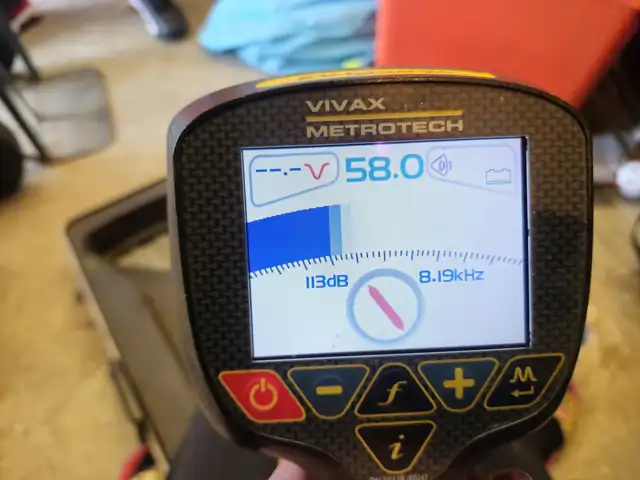
- Trace and listen. Supply lines traced through the crawlspace, walls and slab where they can be, and the acoustic sensor placed along them to find the peak of the leak noise.
- Thermal and moisture. A thermal camera reads the warm trail of a hot-side leak through drywall or slab; moisture meters confirm the wet zone and its edges.
- Mark. One location, with a note on what's expected behind it: pipe material, likely failure, which side.
- Open and repair. The wall, ceiling or floor opened at the mark, the failed section replaced by our licensed plumbers, pressure tested, and the opening patched.
Equipment and materials
- Acoustic leak sensor and amplifier
- Thermal imaging camera
- Pin and pinless moisture meters
- Pressure gauges and isolation fittings
- Pipe locator and tracer
What shapes the scope
Every property is different, and these are the things that decide whether a job is a quick morning or a full day. We'll tell you which it is before we start.
- Whether the leak is on the hot or cold side and which branch
- Pipe material: galvanized, copper, polybutylene, PEX or CPVC
- Construction: crawlspace, slab-on-grade, basement, finished walls
- Access to shutoffs and the water heater valves
- How long the leak has been running and the extent of the wet zone
Interior Water Leak Detection on real Kitsap jobs
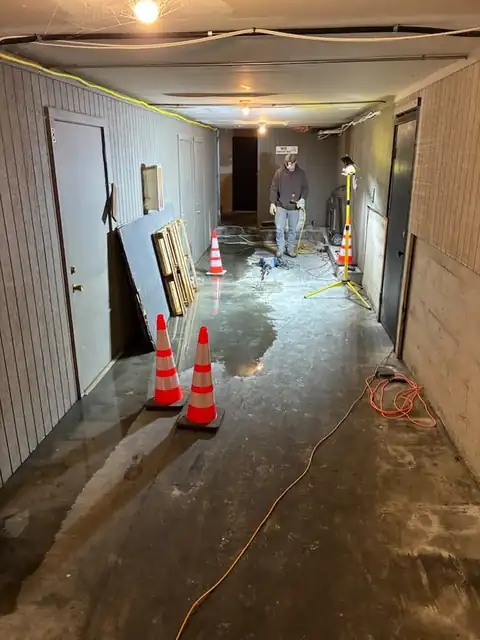
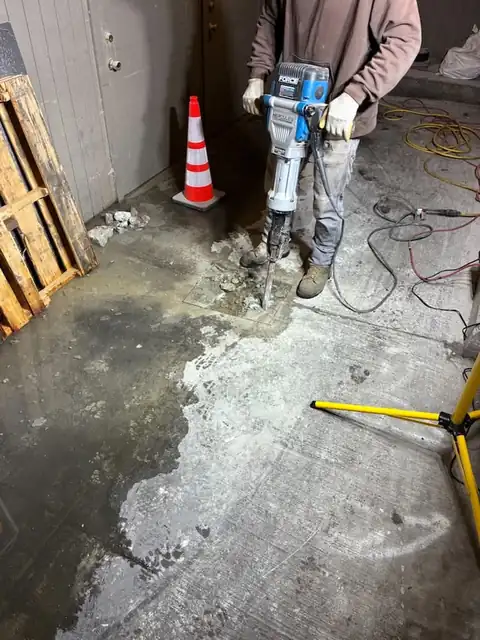
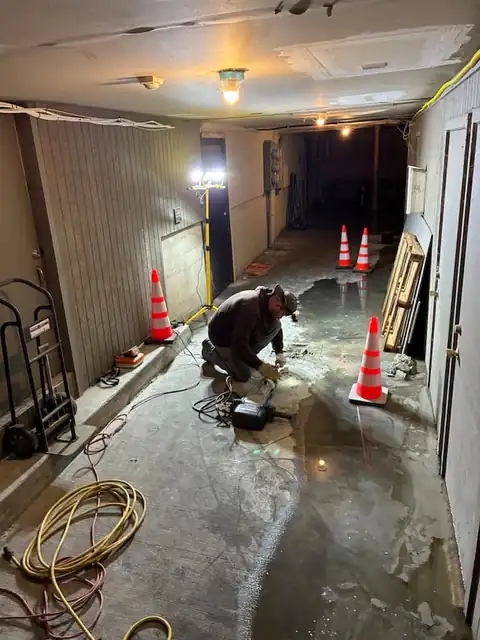
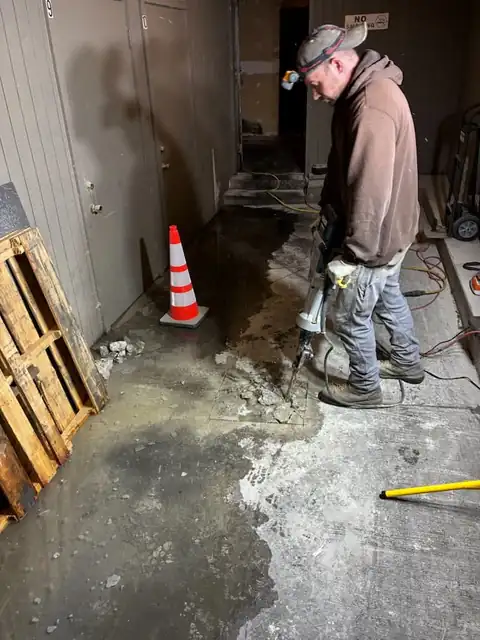
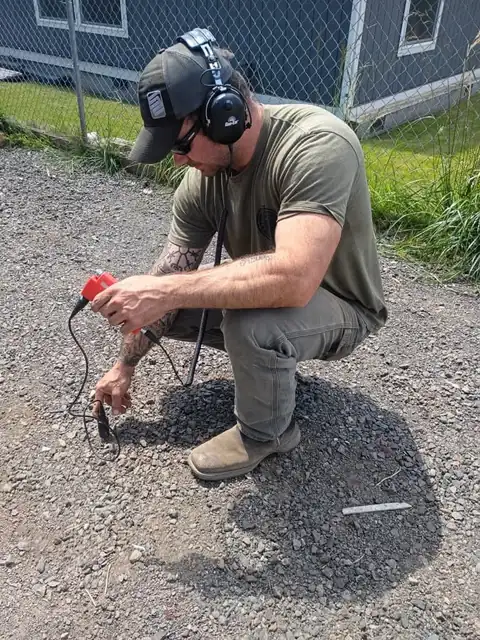
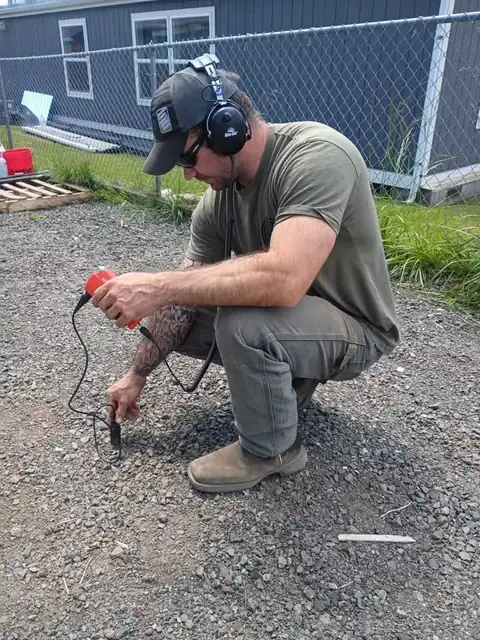
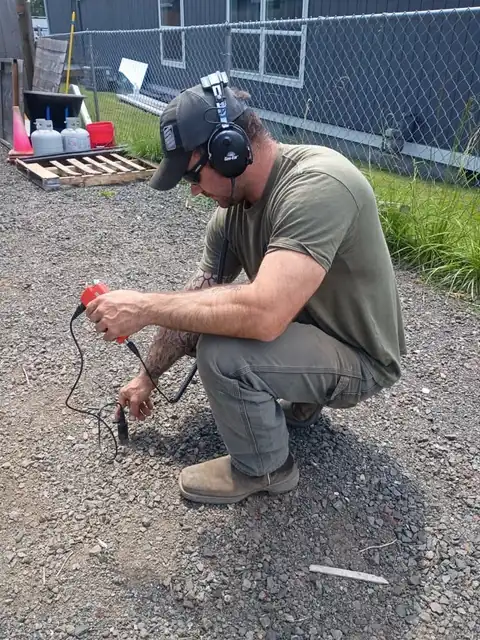
Interior Water Leak Detection across the peninsula
Each community page covers what the local ground, water utility and housing stock mean for this work.
Interior Water Leak Detection in Bremerton
The shipyard city's older galvanized lines fail quietly and show up as a wet lawn or a water bill nobody can explain.
Interior Water Leak Detection in Silverdale
The 1980s and 90s subdivision boom around the mall left thousands of polybutylene service lines that are now failing on schedule.
Interior Water Leak Detection in Port Orchard
The county seat's hillside lots and clay soils turn small leaks into slope problems, and long rural runs hide breaks for months.
Interior Water Leak Detection in Poulsbo
Little Norway's mix of century-old downtown lines and fast-draining bay-side outwash means leaks hide well and fail suddenly.
Interior Water Leak Detection in Bainbridge Island
Clay soils and 500-foot driveways make island leaks slow to surface and expensive to guess at, which is why we locate before we dig.
Interior Water Leak Detection in Kingston
Ferry-town acreage with long wooded service runs where a leak can hide under hardpan for an entire winter.
Interior Water Leak Detection in Keyport
A century-old Navy village with short lots, old lines and shoreline clay that keeps everything damp.
Interior Water Leak Detection in Tracyton
Bluff-side lots over Dyes Inlet where seeps and springs make it easy to mistake groundwater for a leak and vice versa.
Interior Water Leak Detection in Hansville
Beach cabins at the tip of the peninsula with shallow lines, high water tables and a long drive for anyone who isn't already in Kitsap.
Interior Water Leak Detection in Indianola
A century-old summer colony where shared lines, easements and bluff clay make leaks a neighborhood puzzle.
Interior Water Leak Detection in Suquamish
Two utilities, mixed-era housing and Agate Pass shoreline clay in the heart of the Port Madison reservation.
Interior Water Leak Detection in Manchester
Rich Passage waterfront lots where the service line runs downhill and every leak finds the beach.
Interior Water Leak Detection in Enetai
East Bremerton's bluff-side neighborhood where mid-century copper lines fail on slopes that drain toward the bay.
Interior Water Leak Detection in Lofall
Rural acreage between Poulsbo and the Hood Canal Bridge where well lines run hundreds of feet through hardpan.
Interior Water Leak Detection in Olalla
Well country at the south end of Kitsap where a leaking line shows up as a pump that won't shut off.
Interior Water Leak Detection in Seabeck
Hood Canal forest parcels where boulders, hardpan and long well lines make guessing at a leak an expensive mistake.
Interior Water Leak Detection in East Port Orchard
South Kitsap's 1970s and 80s subdivisions where copper and poly lines are reaching the end of their run.
Interior Water Leak Detection in Rollingbay
The northeast corner of Bainbridge where clay slopes, long drives and small community systems keep leaks hidden for seasons.
Interior Water Leak Detection in Port Townsend
A Victorian seaport where 1890s service lines sit under historic sidewalks and the gravity pipeline from the Quilcene delivers the water.
Interior Water Leak Detection: common questions
Do you have to cut open walls to find the leak?
Can you tell whether it's the hot or cold line?
Who does the interior repair?
What if the leak is actually on the service line outside?
Services that often go together
Interior Water Line Repair
Licensed repair of leaking or failed supply lines inside the house: copper, galvanized, polybutylene, PEX and CPVC, at one opened spot.
Read more →Slab Leak Detection
Pinpoint water lines leaking under concrete slabs and basement floors, then open only what has to be opened.
Read more →Underground Water Leak Detection
Acoustic and correlator leak detection that pinpoints a buried water line break before anyone digs.
Read more →Something underground isn't right?
We answer 24 hours a day. We locate before we dig, and we handle the whole job with our own crew and equipment.