- Home
- Commercial
- Commercial Water Line Replacement
Commercial Water Line Replacement
Planned, phased replacement of aging private mains and building service lines in continuous HDPE, scheduled around tenants and the dry season.
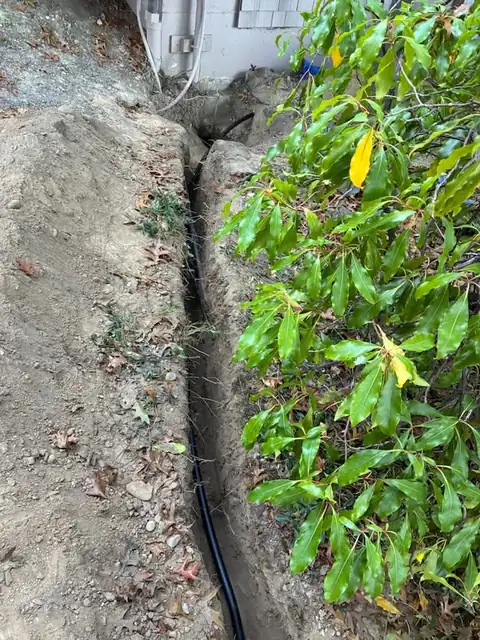
Most of Kitsap County's condominium complexes, apartment communities, mobile home parks and commercial centers were built from the 1970s through the 1990s, and their private water mains were installed once, in whatever material was standard then, and never touched since. Thin-wall polyethylene, early PVC with solvent joints, polybutylene in some cases, galvanized on the oldest sites. Those mains are reaching the end of their expected life at the same time, and the pattern is familiar: one break, then another a year later, then a third, each one at night, each one with a flooded common area and water off to every unit.
A planned replacement ends the pattern. We trace the existing system, design a new one in continuous HDPE with properly placed building shutoffs and tracer wire, and phase the work by building or by run so water is off to one section at a time with residents told in advance. Where the old main's route is intact enough, new pipe can often be pulled through it from a pit at each end, which keeps the lawn and the drive aisles largely intact. Where it isn't, the mini excavator trenches a clean path, and the surface is restored behind it.
The scheduling is the part owners appreciate most. Planned replacement happens in the dry season, in daylight, on a published timeline, with a crew that has done the locate and knows the site. Emergency repairs happen at midnight in the rain. The cost of a planned replacement is also far more predictable than the sum of the emergency repairs it prevents, and that predictability is what a reserve study is for.
When a property needs this
- A private main that has failed more than once
- Thin-wall, polybutylene or galvanized mains identified during a repair
- A reserve study that has flagged the water system
- A site renovation that opens the ground anyway
- Chronic pressure problems from undersized or restricted mains
How the job runs
- Assess and map. The existing system traced, materials and failure history documented, and a condition opinion written for the board.
- Design and phase. New routing, pipe sizing, shutoff placement and a phasing plan that keeps water on to most of the site at any given time.
- Locates and notice. Utility locates requested; residents and tenants notified of each phase's shutoff window.
- Pull or trench. Continuous HDPE pulled through the old route where possible, trenched where not. Gravel bedding, tracer wire, warning tape.
- Tie in and test. Each phase connected with buried-rated fittings and new shutoffs, pressure tested, and brought online.
- Restore. Lawn, beds, gravel and drive aisles restored phase by phase so the site is never torn up all at once.
What the owner or board receives
- System map and condition assessment
- Phased replacement plan with scope and schedule
- New continuous HDPE mains with working shutoffs and tracer wire
- As-built drawing of the new system
- Restored site
What shapes the scope
- Total length of mains and number of buildings
- Whether the old route can be pulled through
- Surfaces crossed and restoration scope
- Phasing and notice requirements
- Utility requirements at the master meter
Commercial work, as it actually looks
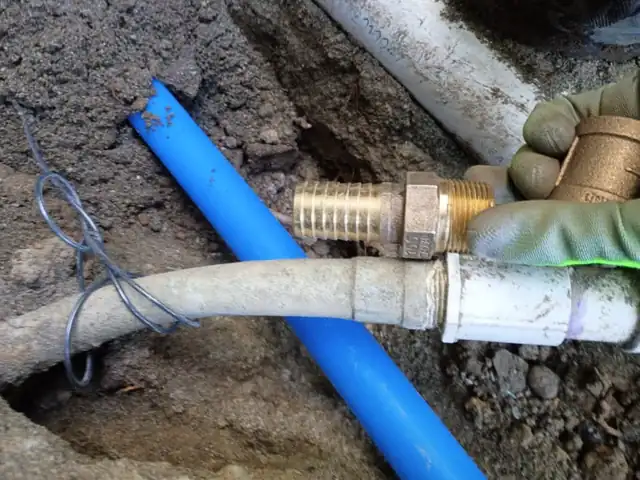
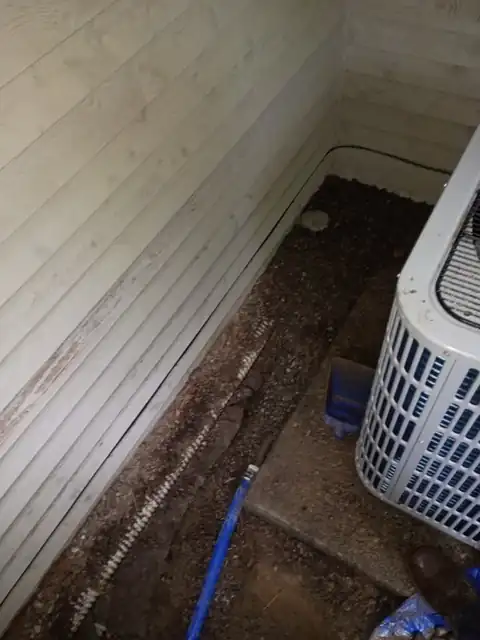
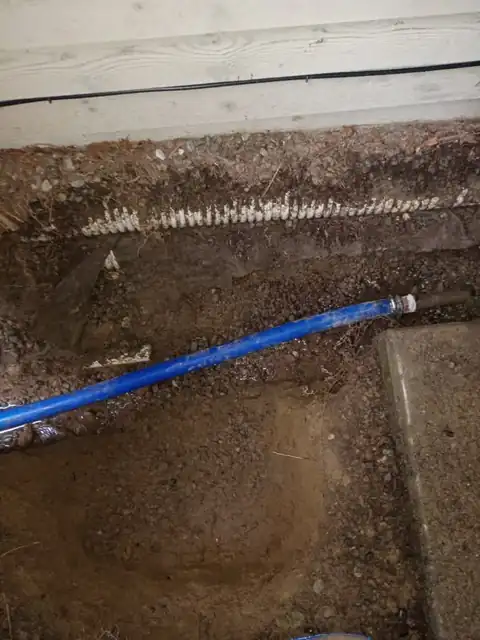
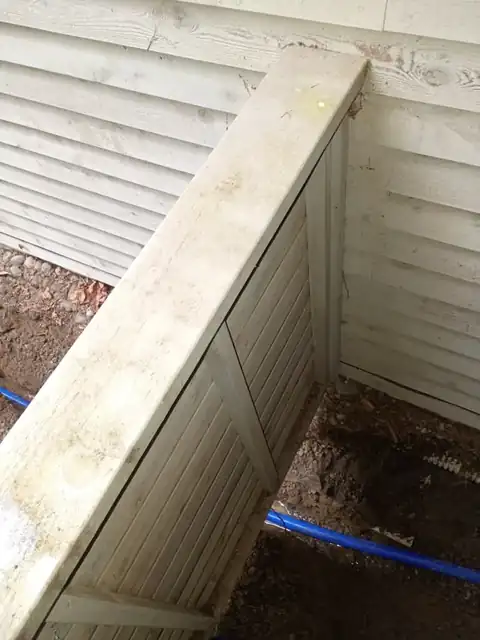
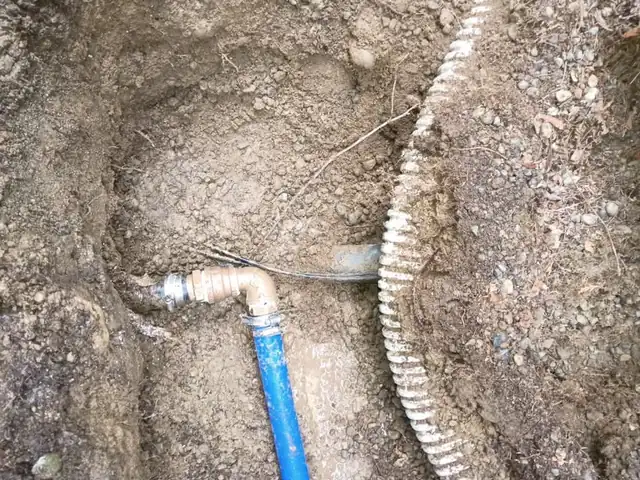
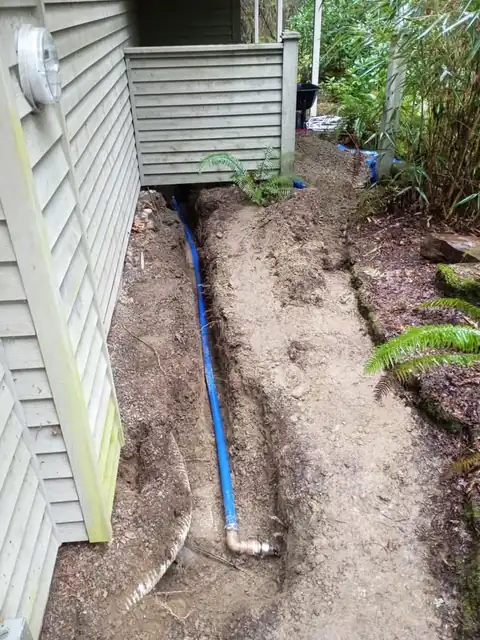
Commercial Water Line Replacement across the peninsula
Bremerton
The shipyard city's older galvanized lines fail quietly and show up as a wet lawn or a water bill nobody can explain.
Silverdale
The 1980s and 90s subdivision boom around the mall left thousands of polybutylene service lines that are now failing on schedule.
Port Orchard
The county seat's hillside lots and clay soils turn small leaks into slope problems, and long rural runs hide breaks for months.
Poulsbo
Little Norway's mix of century-old downtown lines and fast-draining bay-side outwash means leaks hide well and fail suddenly.
Bainbridge Island
Clay soils and 500-foot driveways make island leaks slow to surface and expensive to guess at, which is why we locate before we dig.
Kingston
Ferry-town acreage with long wooded service runs where a leak can hide under hardpan for an entire winter.
Keyport
A century-old Navy village with short lots, old lines and shoreline clay that keeps everything damp.
Tracyton
Bluff-side lots over Dyes Inlet where seeps and springs make it easy to mistake groundwater for a leak and vice versa.
Hansville
Beach cabins at the tip of the peninsula with shallow lines, high water tables and a long drive for anyone who isn't already in Kitsap.
Indianola
A century-old summer colony where shared lines, easements and bluff clay make leaks a neighborhood puzzle.
Suquamish
Two utilities, mixed-era housing and Agate Pass shoreline clay in the heart of the Port Madison reservation.
Manchester
Rich Passage waterfront lots where the service line runs downhill and every leak finds the beach.
Enetai
East Bremerton's bluff-side neighborhood where mid-century copper lines fail on slopes that drain toward the bay.
Lofall
Rural acreage between Poulsbo and the Hood Canal Bridge where well lines run hundreds of feet through hardpan.
Olalla
Well country at the south end of Kitsap where a leaking line shows up as a pump that won't shut off.
Seabeck
Hood Canal forest parcels where boulders, hardpan and long well lines make guessing at a leak an expensive mistake.
East Port Orchard
South Kitsap's 1970s and 80s subdivisions where copper and poly lines are reaching the end of their run.
Rollingbay
The northeast corner of Bainbridge where clay slopes, long drives and small community systems keep leaks hidden for seasons.
Port Townsend
A Victorian seaport where 1890s service lines sit under historic sidewalks and the gravity pipeline from the Quilcene delivers the water.
Commercial Water Line Replacement: questions
Can replacement be done without shutting off the whole property?
How is this priced for a reserve study?
Something underground isn't right?
We answer 24 hours a day. We locate before we dig, and we handle the whole job with our own crew and equipment.