- Home
- Commercial
- Commercial Slab & Under-Floor Leak Detection
Commercial Slab & Under-Floor Leak Detection
Locating pressurized lines leaking under commercial slabs, basements and lower levels, so the floor is opened at one spot with the rest of the building in use.
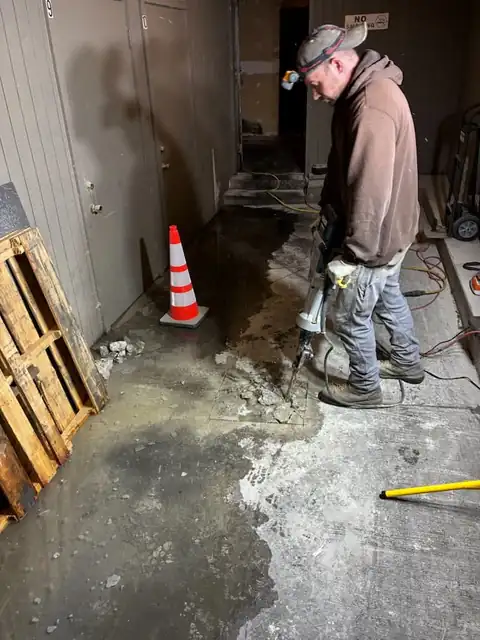
A commercial building with a wet hallway, a utility room that never dries, a musty lower level or a floor that's warm in one patch has a pressurized line leaking under the slab. The signs are easy to dismiss as humidity or a roof problem for a long time, and every month that passes is water softening the subgrade under a floor people walk on. When someone finally opens the floor, it has to be in the right place, because every exploratory hole in a commercial slab is a saw cut, a jackhammer and a day of disruption.
We locate slab leaks acoustically. The ground microphone works through concrete; with the line pressurized, the leak noise transmits well through the slab and the technician can find the peak signal clearly. We confirm the loss at the meter first, trace the line's route under the floor where it can be traced, and mark the spot. On a commercial site that means cones, lights, dust control and after-hours scheduling so the rest of the floor stays in use.
With the leak pinpointed, we open the slab at that spot only, expose and repair the line, backfill and patch. Where a slab line has failed before, or is old copper or galvanized, we lay out a re-route above the slab or through a new buried line outside the building so the next leak isn't under the floor. The written report with photos goes to the owner, the tenant and the insurer.
When a property needs this
- A persistently wet hallway, utility room or lower level with no fixture nearby
- A warm or damp patch on a commercial floor
- A water bill that climbs with no exterior wet spot
- A musty smell in a basement or parking level
- A slab line that has failed before
How the job runs
- Confirm. Meter test with the building's fixtures closed to prove the line is losing water.
- Trace. The line's route under the slab traced where possible; otherwise worked from the known supply and fixture locations.
- Listen through the slab. The ground microphone on the floor along the route until the signal is consistent and peaked.
- Open one spot. Saw cut and demolition hammer at the mark, with cones, lights and dust control.
- Repair or re-route. The exposed section repaired, or a re-route laid out if the line is at the end of its life.
- Patch and reopen. Compacted backfill, concrete patch, the area cleaned and returned to use.
What the owner or board receives
- Confirmed loss and located position
- One opening in the slab, not several
- Repair or re-route proposal
- Written report with photos
- Floor patched and area reopened
What shapes the scope
- Whether the route under the slab is known
- Slab thickness and reinforcement
- Working hours and tenant access
- Whether a re-route makes more sense than a repair
Commercial work, as it actually looks
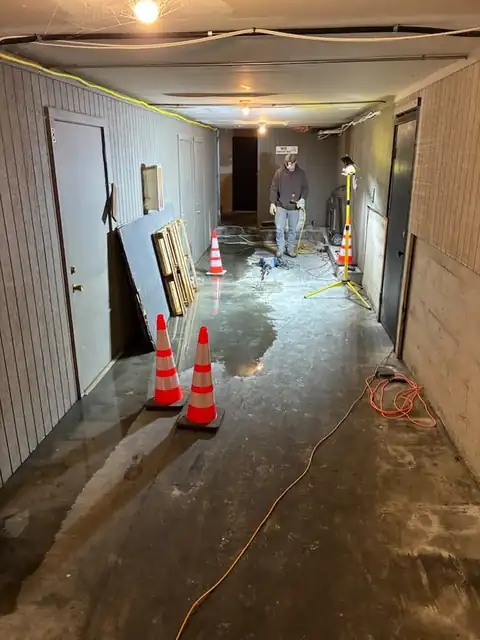
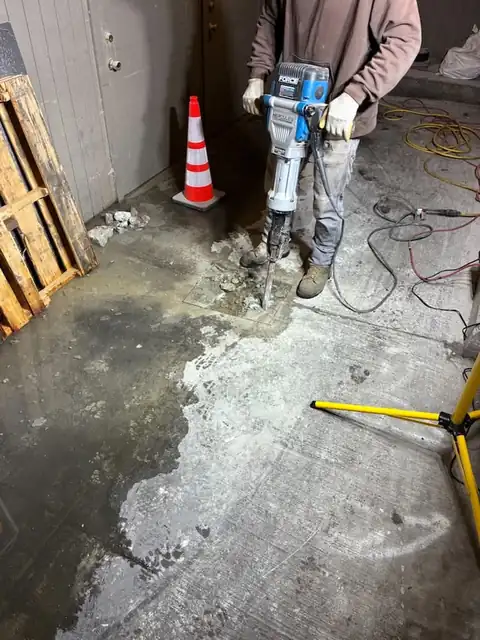
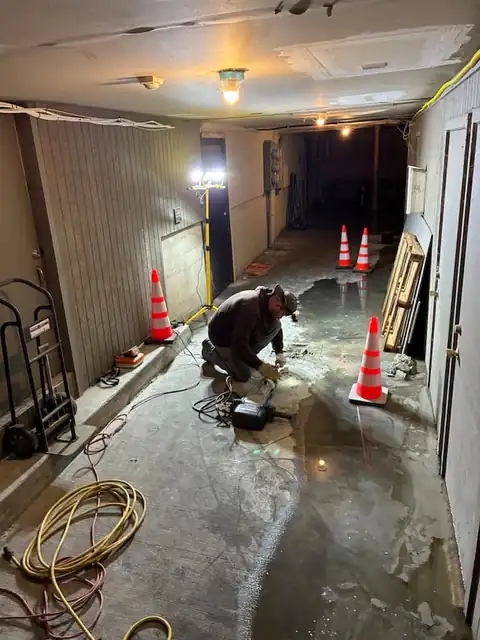
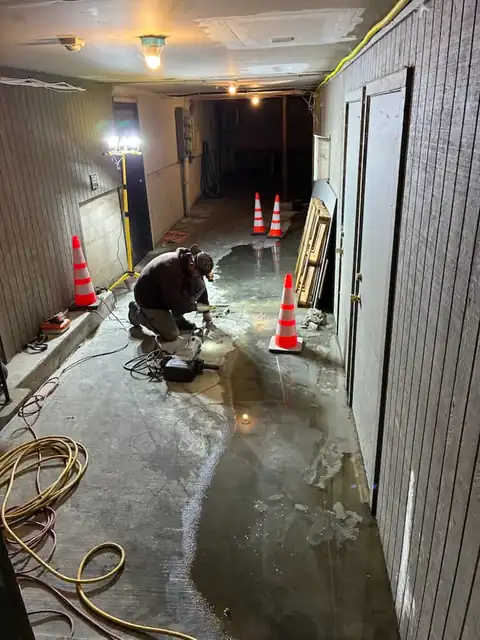
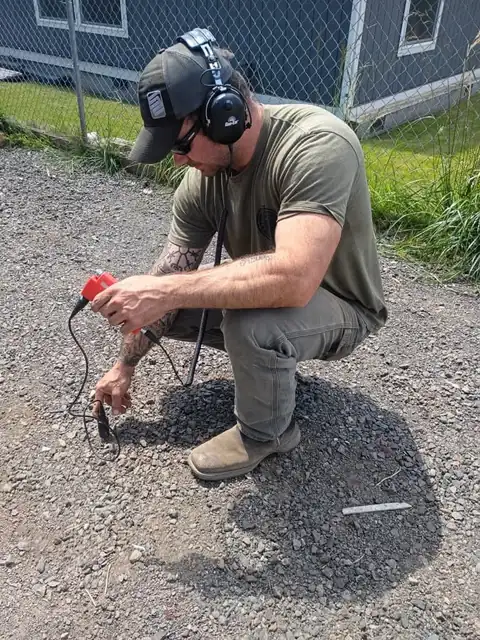
Commercial Slab & Under-Floor Leak Detection across the peninsula
Bremerton
The shipyard city's older galvanized lines fail quietly and show up as a wet lawn or a water bill nobody can explain.
Silverdale
The 1980s and 90s subdivision boom around the mall left thousands of polybutylene service lines that are now failing on schedule.
Port Orchard
The county seat's hillside lots and clay soils turn small leaks into slope problems, and long rural runs hide breaks for months.
Poulsbo
Little Norway's mix of century-old downtown lines and fast-draining bay-side outwash means leaks hide well and fail suddenly.
Bainbridge Island
Clay soils and 500-foot driveways make island leaks slow to surface and expensive to guess at, which is why we locate before we dig.
Kingston
Ferry-town acreage with long wooded service runs where a leak can hide under hardpan for an entire winter.
Keyport
A century-old Navy village with short lots, old lines and shoreline clay that keeps everything damp.
Tracyton
Bluff-side lots over Dyes Inlet where seeps and springs make it easy to mistake groundwater for a leak and vice versa.
Hansville
Beach cabins at the tip of the peninsula with shallow lines, high water tables and a long drive for anyone who isn't already in Kitsap.
Indianola
A century-old summer colony where shared lines, easements and bluff clay make leaks a neighborhood puzzle.
Suquamish
Two utilities, mixed-era housing and Agate Pass shoreline clay in the heart of the Port Madison reservation.
Manchester
Rich Passage waterfront lots where the service line runs downhill and every leak finds the beach.
Enetai
East Bremerton's bluff-side neighborhood where mid-century copper lines fail on slopes that drain toward the bay.
Lofall
Rural acreage between Poulsbo and the Hood Canal Bridge where well lines run hundreds of feet through hardpan.
Olalla
Well country at the south end of Kitsap where a leaking line shows up as a pump that won't shut off.
Seabeck
Hood Canal forest parcels where boulders, hardpan and long well lines make guessing at a leak an expensive mistake.
East Port Orchard
South Kitsap's 1970s and 80s subdivisions where copper and poly lines are reaching the end of their run.
Rollingbay
The northeast corner of Bainbridge where clay slopes, long drives and small community systems keep leaks hidden for seasons.
Port Townsend
A Victorian seaport where 1890s service lines sit under historic sidewalks and the gravity pipeline from the Quilcene delivers the water.
Commercial Slab & Under-Floor Leak Detection: questions
Can the building stay open during the work?
Something underground isn't right?
We answer 24 hours a day. We locate before we dig, and we handle the whole job with our own crew and equipment.