- Home
- Emergency
Water where it shouldn't be? Call now.
A buried line that has let go is dumping water at full pressure into the ground under your house. We answer around the clock and we come with the pump, the lights, the locating equipment and the mini excavator on the first trip.
What to do right now
- Stop the water. Main shutoff where the line enters the house: crawlspace, utility room, garage wall, or near a hose bib at the foundation. If you can't find it or it won't turn, the meter box at the street has a valve; a quarter turn with a wrench closes most of them. On a well, switch off the pump breaker. We'll walk you through any of this on the phone.
- Protect the house. If water is entering a crawlspace or basement, get valuables and electrical devices out of it. Don't wade into standing water near outlets or appliances.
- Keep clear. Saturated ground over a pipe trench is loose and can collapse. Keep kids, pets and vehicles off the wet area.
- Don't dig. The water is surfacing where the ground let it out, which in Kitsap till is often a long way from the break. We'll find the break acoustically and dig once.
- Call (206) 354-9906. Tell us whether the water is off, where you see water, utility or well, and whether a truck and a small excavator can get near the area.
What happens when we arrive
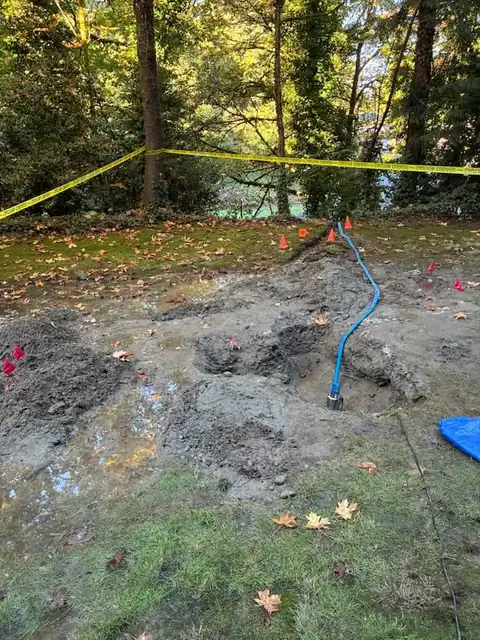
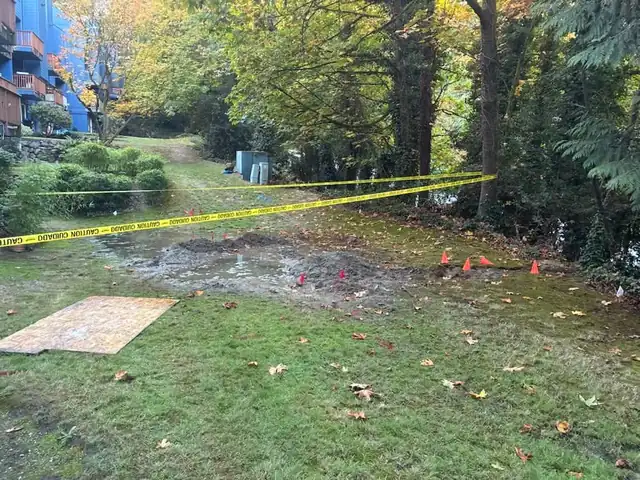
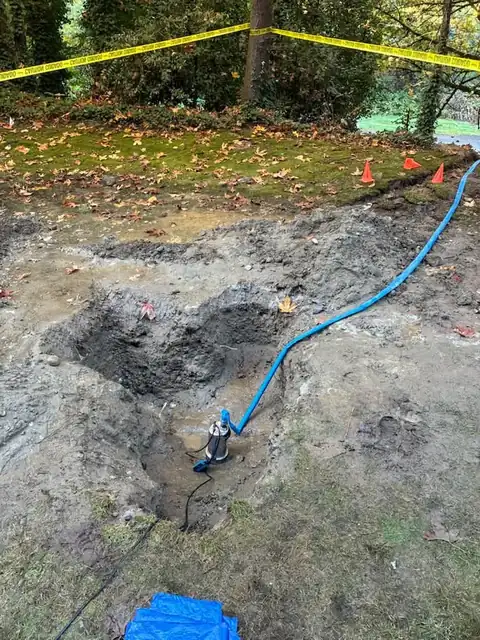
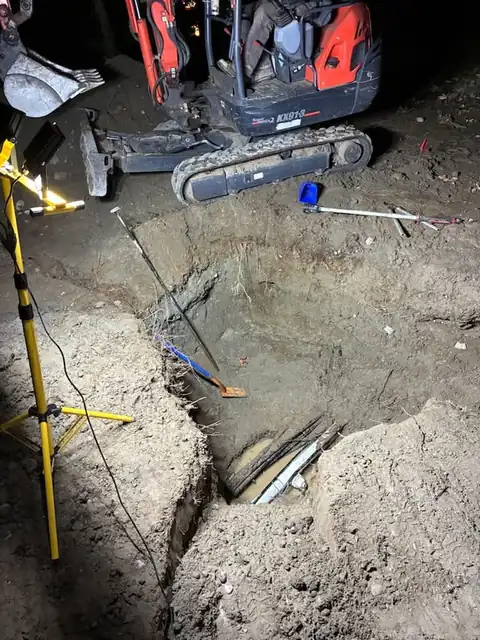
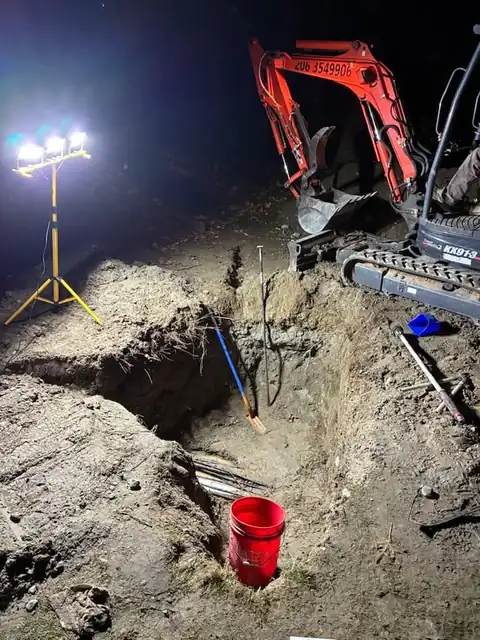
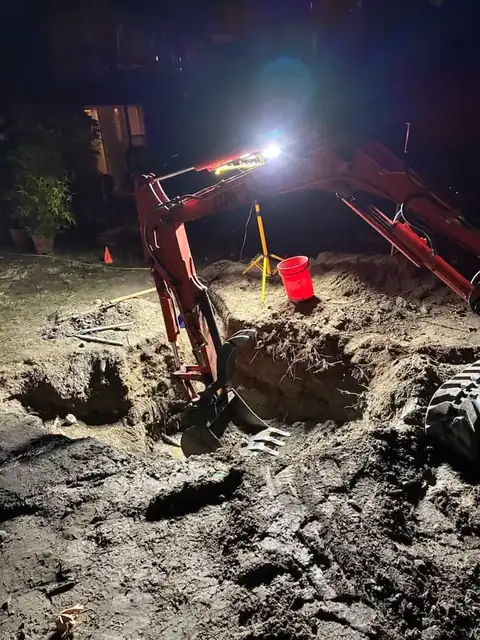
We confirm the water is stopped, tape and cone the area, lay plywood where people walk, and put a submersible pump in the standing water with the discharge routed away from the house. Lights go up if it's dark. Then, even on a catastrophic break, we locate: the line is briefly re-pressurized and the ground microphone and correlator find the failure, because the water on the surface tells us almost nothing about where the pipe actually failed.
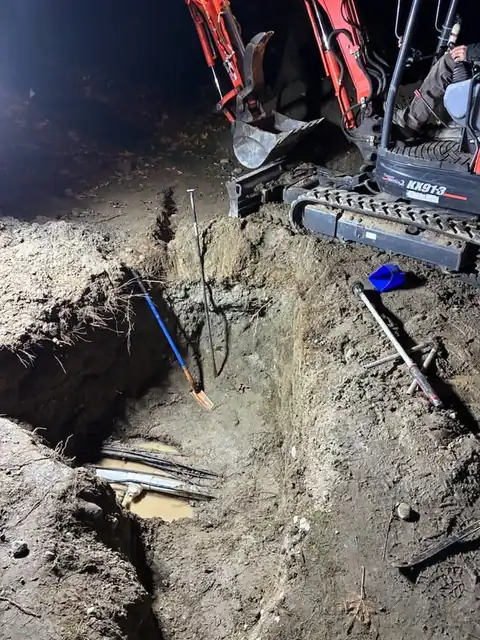
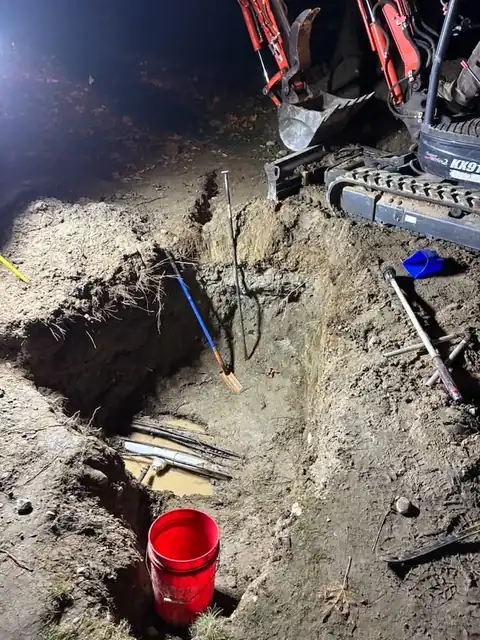
The mini excavator opens the ground at the mark, hand tools finish around the pipe, and the failure is exposed. A sound, buried-rated repair goes in with PEX or HDPE and brass or stainless fittings, the line is pressure checked, and your water is turned back on. Bedding, backfill and restoration follow, that night or the next morning depending on conditions. You get a written description with photos, and a candid note on whether the rest of the line is the same age and material as the part that failed.
Emergencies we handle
- Service line blown open under a lawn, driveway or garden
- Private main breaks at condominiums, apartments and commercial properties, including after hours
- Old galvanized or copper lines that finally let go at the foundation
- Well lines split in a freeze or by ground movement
- Crawlspaces and basements filling from outside
- Sudden sinkholes and settling over a buried line
- Polybutylene splits in 1980s and 90s subdivisions
For a longer walk-through, read What to do when a buried water line breaks and How to find and shut off your water main.
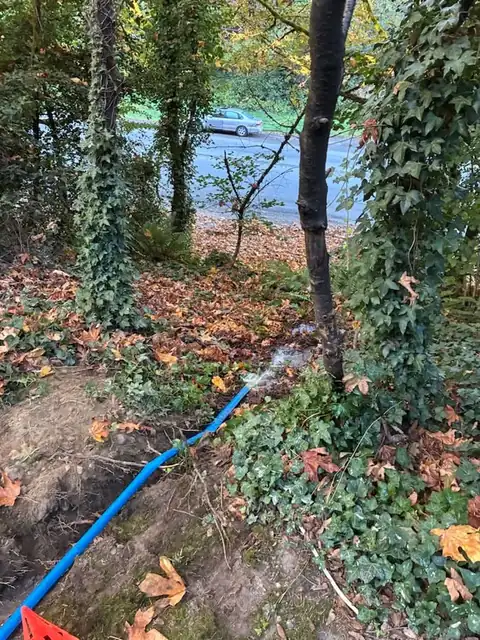
What an emergency actually looks like
Emergency questions
What counts as an emergency?
What should I do before you arrive?
Will I have water tonight?
Do you really work at night?
Do you charge more for emergencies?
Don't wait for morning.
Shut the water off, keep clear, and call. We'll be on the way.