- Home
- Our Process
Locate first. Dig once.
The order of operations is the method. Here is exactly what happens between your phone call and the last rake stroke, and why we do it this way.
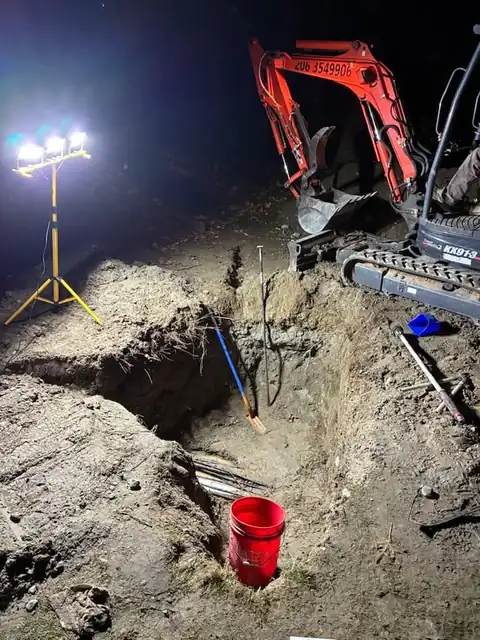
The call
We ask what you're seeing, whether you're on a utility or a well, whether the water is off, and whether it's an emergency. Emergencies dispatch immediately with everything on the trailer. Scheduled investigations get a specific window, and we ask you to make sure the meter, the house shutoff and the suspect area are accessible when we arrive.
If you can, do the five-minute meter test before we get there. It tells us a lot and it costs you nothing.
Confirm
Every fixture closed. Low-flow indicator watched. House isolated at the main shutoff. Flow timed to get a gallons-per-hour number. On a well, the same thing with gauges at the pressure tank. We leave this step knowing whether the loss is on the buried line, indoors, or on irrigation, and roughly how big it is.
If it isn't the buried line, we tell you so and point you to the right trade. We're not going to locate on a line that isn't leaking.
Trace
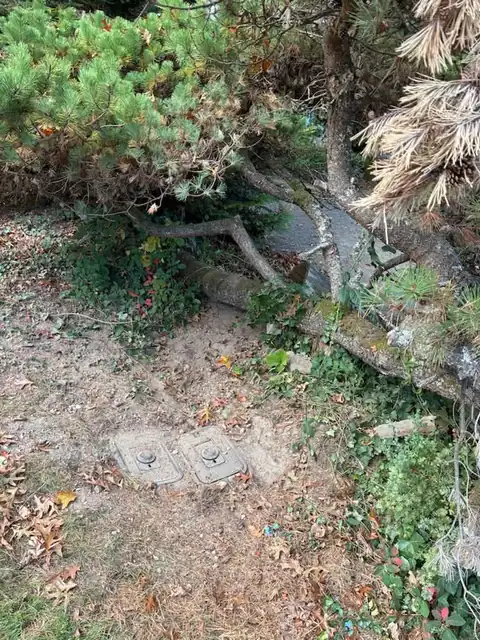
Most Kitsap properties have no drawing of where the service line runs. We trace the actual route from the meter or the well house to the point of entry with a pipe and cable locator on metallic pipe and tracer wire, and with acoustic and sonde methods on plastic. The route gets marked on the ground so we're listening along the real pipe.
This is also where we find the surprises: the easement across the neighbor's lot, the detour around an old septic tank, the branch to a shop nobody mentioned.
Listen and correlate
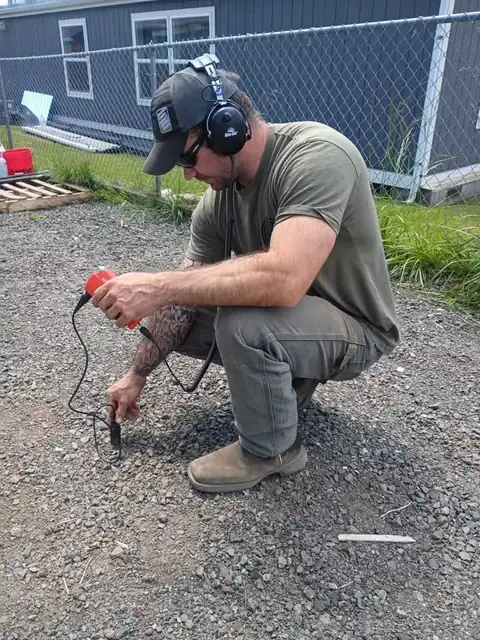
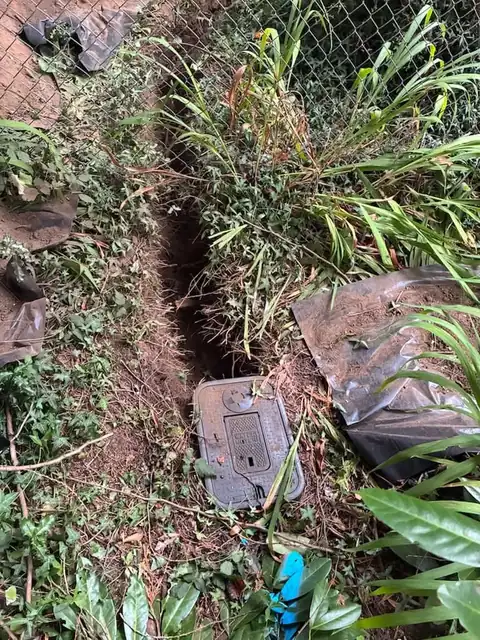
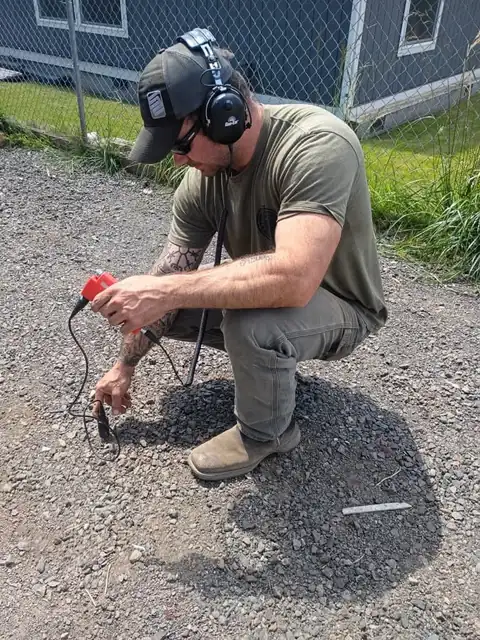
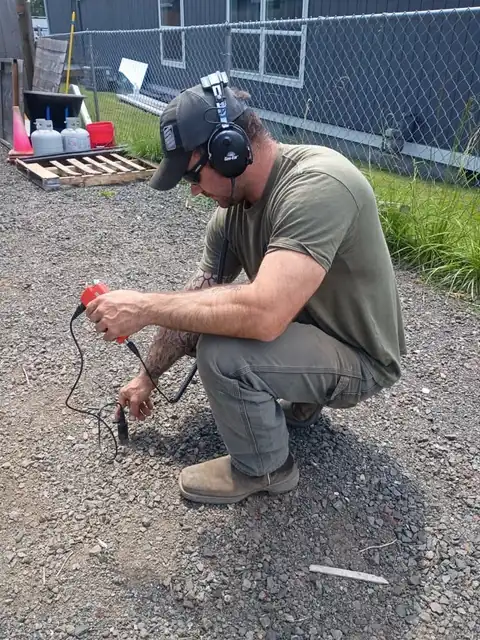
The acoustic ground microphone goes along the traced route, listening at intervals for the hiss of pressurized water escaping into soil. On a long run, correlator sensors go on the pipe at each accessible end and the instrument calculates where between them the break is from the time difference in the sound. The ground microphone pinpoints at the correlated position.
Soil type, depth, pipe material and background noise all change what we hear. Reading those differences is the part that takes years to learn and is why we're confident in our marks.
Mark
Paint and flags at the pinpointed spot with an estimated depth. Where the ground allows, a thin probe rod confirms the saturated zone. You get a clear answer: dig here, expect the pipe about this deep, expect this kind of failure.
If you'd rather have your own contractor dig, this is where our job ends and you get a written report. Most customers want us to keep going.
Expose
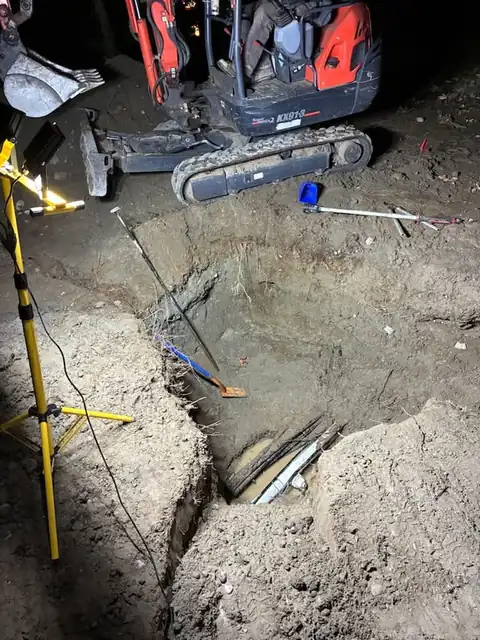
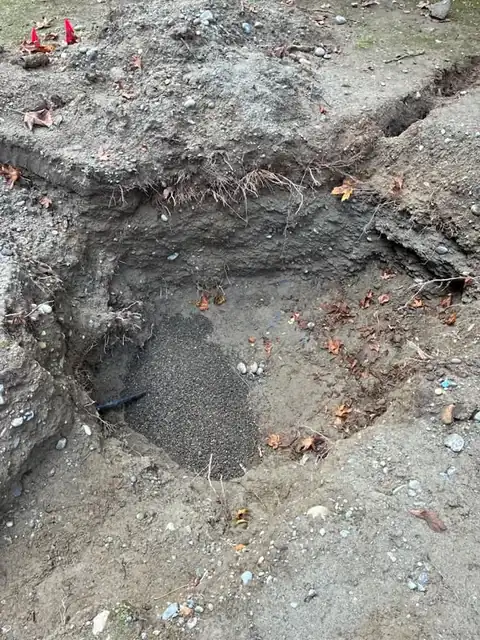
Utility locates are requested before any machine excavation. Tarps and plywood go down for spoils and tracks. Hand tools open shallow, tight spots next to foundations and inside root zones; the mini excavator opens everything else, through hardpan, cobbles and roots that would take a shovel crew days. Submersible pumps keep the pit workable in the wet months.
One excavation, at the break. That sentence is the whole reason the locate comes first.
Decide with the pipe in hand
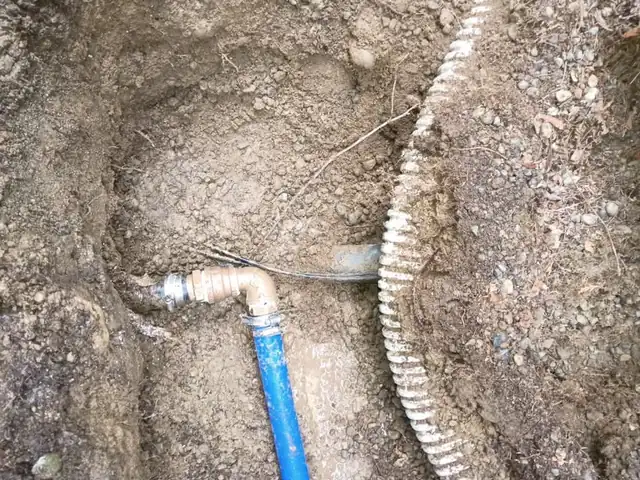
With the failure exposed we look hard at the pipe on either side. Sound pipe with a single failure gets a spot repair. Polybutylene, rusted galvanized, brittle early poly, or a line that has failed before gets a straight recommendation to replace, with the evidence in your hand. Sometimes the right answer is both: a sound repair tonight, a replacement when it suits you.
We'd rather you make that call with the pipe in front of you than find out next winter.
Repair or replace
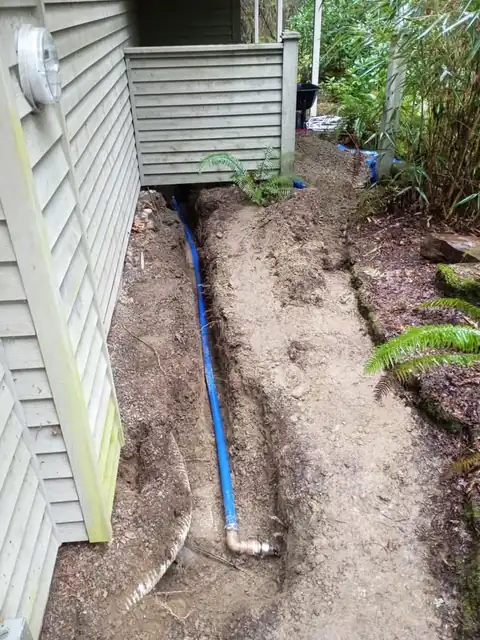
Spot repairs are cut out and tied in with PEX or HDPE and buried-rated brass or stainless fittings. Replacements are continuous HDPE or PEX from the meter to the house with no buried joints, pulled through the old route where possible or trenched with the mini excavator. Everything is pressure tested before any backfill goes in.
We don't bury a repair we wouldn't leave under our own driveway.
Bed, backfill, restore
Clean gravel bedding under and around the pipe so it isn't resting on cobbles or sitting in muck. Native soil back in compacted lifts, not dumped in one go to settle for five years. Tracer wire alongside plastic pipe. Then the surface: lawn regraded and seeded or sodded, gravel raked and leveled, bark beds rebuilt, pavers reset.
Water on. Site clean. A written description of what was found and done, with photos, for your records and for the utility if you're asking for a bill adjustment.
Process questions
How long does the whole process take?
Do I need to be home?
What if the leak turns out to be inside the house?
Can the process be split: you locate, someone else digs?
Something underground isn't right?
We answer 24 hours a day. We locate before we dig, and we handle the whole job with our own crew and equipment.