- Home
- Commercial
- Commercial Interior Water Line Repair
Commercial Interior Water Line Repair
Licensed repair of failed supply mains, risers, branches and hot-water loops inside commercial and multi-family buildings, scheduled around tenants.
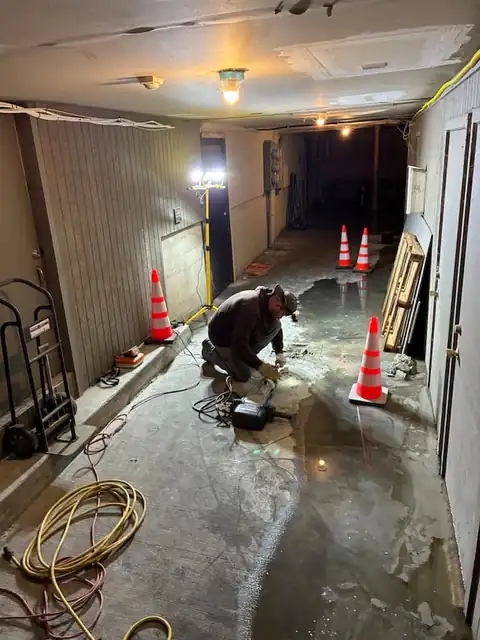
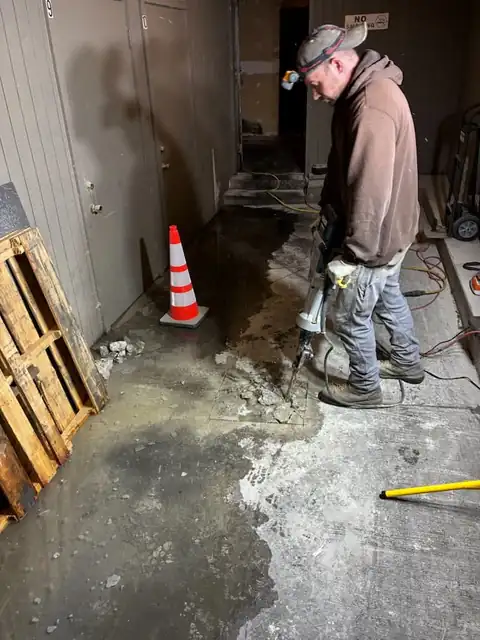
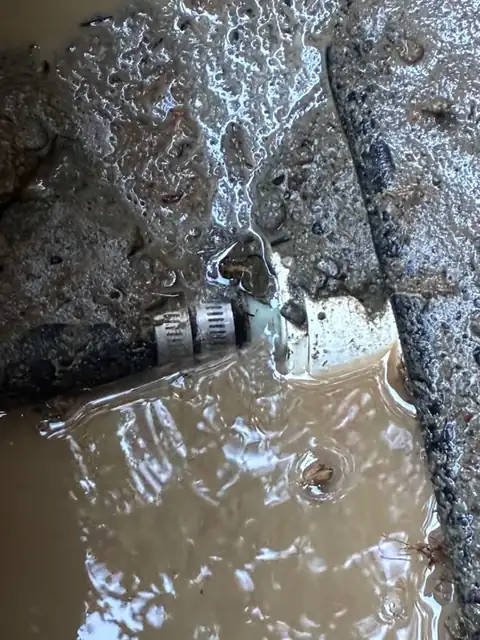
A located leak on a commercial building's interior supply is repaired at one opened spot by our licensed plumbers: the section isolated, drained and exposed, the failed pipe or fitting cut out, new pipe tied in with the correct transition for the material, pressure tested, and the ceiling or wall closed. What makes it commercial is everything around it: the shutoff affects a floor or a wing rather than a house, the opening is in a corridor people use, and the work is scheduled so a restaurant, a clinic or a building of residents isn't without water during business hours.
The materials we find in Kitsap commercial buildings range from galvanized risers in the oldest downtown stock in Bremerton and Port Townsend, to copper mains from the 1970s and 80s that pinhole where they hang on steel or pass through slabs, to CPVC and early PEX in newer multi-family. Hot water recirculation loops on larger buildings fail at their own pace, usually at a fitting near the pump. We carry the transitions for all of it, and we tell the owner plainly when what's in the ceiling is a system at the end of its life rather than a system with one bad joint.
We're a registered general contractor, bonded and insured, with licensed plumbers on the team. The report after a repair documents what failed, what was done and the condition of the rest of the run, for the owner, the manager and the insurer, and it feeds the planning conversation about a riser or main replacement if that's where the building is headed.
When a property needs this
- A located leak on a riser, main, branch or hot loop
- A failed fitting, valve or union in a mechanical room
- A pinhole in copper at a hanger, a slab penetration or a dissimilar-metal contact
- A frozen-and-thawed line in an unheated space
- Damage from a tenant improvement or other trade
How the job runs
- Schedule. Shutoff window agreed with the manager and tenants notified; after-hours when the building needs it.
- Isolate and drain. The affected riser, branch or loop isolated at its valves and drained.
- Open. Ceiling, chase or wall opened at the mark, with protection for the space and dust control.
- Repair. Failed section or fitting cut out, new pipe tied in with the right transition, supports restored.
- Test and restore. Pressure tested under full system pressure, then the floor or wing brought back on and air bled.
- Close and report. Opening closed and patched, and a written report with photos for the owner.
What the owner or board receives
- Repair with pressure test
- Opening closed and patched
- Photos of the failure and the repair
- Written report for owner, manager and insurer
- Assessment of the rest of the run
What shapes the scope
- Pipe size and material
- Location: ceiling, chase, mechanical room, slab
- Shutoff scope and tenant impact
- After-hours requirements
- Whether a section needs replacing rather than coupling
Commercial work, as it actually looks
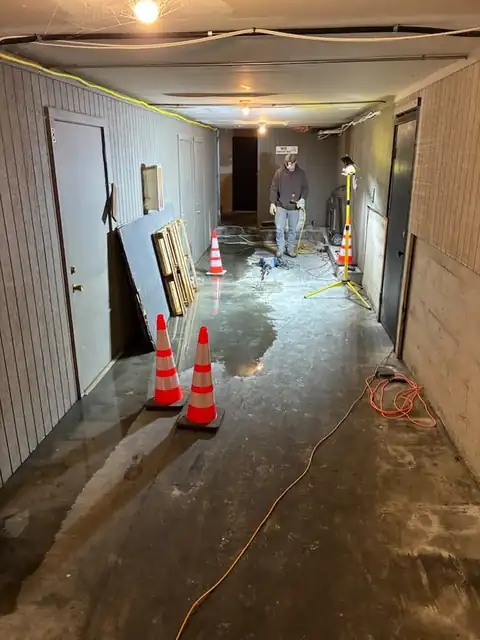
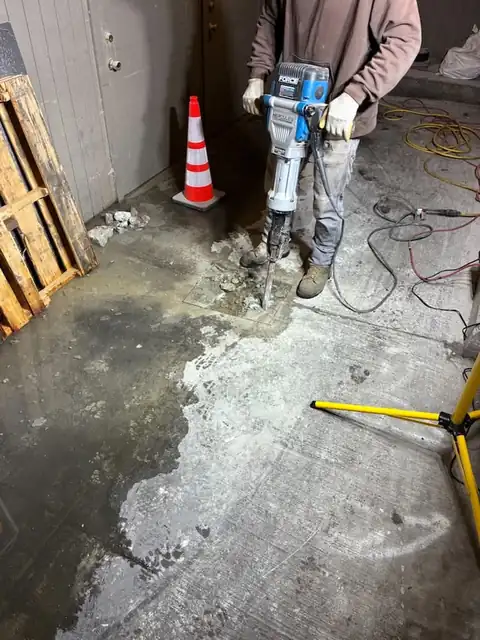
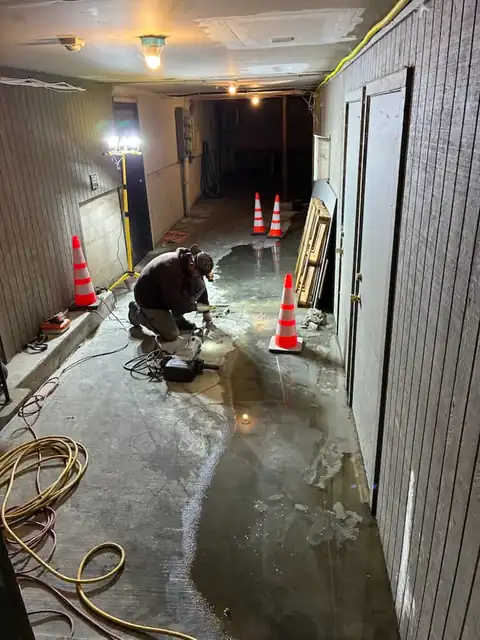
Commercial Interior Water Line Repair across the peninsula
Bremerton
The shipyard city's older galvanized lines fail quietly and show up as a wet lawn or a water bill nobody can explain.
Silverdale
The 1980s and 90s subdivision boom around the mall left thousands of polybutylene service lines that are now failing on schedule.
Port Orchard
The county seat's hillside lots and clay soils turn small leaks into slope problems, and long rural runs hide breaks for months.
Poulsbo
Little Norway's mix of century-old downtown lines and fast-draining bay-side outwash means leaks hide well and fail suddenly.
Bainbridge Island
Clay soils and 500-foot driveways make island leaks slow to surface and expensive to guess at, which is why we locate before we dig.
Kingston
Ferry-town acreage with long wooded service runs where a leak can hide under hardpan for an entire winter.
Keyport
A century-old Navy village with short lots, old lines and shoreline clay that keeps everything damp.
Tracyton
Bluff-side lots over Dyes Inlet where seeps and springs make it easy to mistake groundwater for a leak and vice versa.
Hansville
Beach cabins at the tip of the peninsula with shallow lines, high water tables and a long drive for anyone who isn't already in Kitsap.
Indianola
A century-old summer colony where shared lines, easements and bluff clay make leaks a neighborhood puzzle.
Suquamish
Two utilities, mixed-era housing and Agate Pass shoreline clay in the heart of the Port Madison reservation.
Manchester
Rich Passage waterfront lots where the service line runs downhill and every leak finds the beach.
Enetai
East Bremerton's bluff-side neighborhood where mid-century copper lines fail on slopes that drain toward the bay.
Lofall
Rural acreage between Poulsbo and the Hood Canal Bridge where well lines run hundreds of feet through hardpan.
Olalla
Well country at the south end of Kitsap where a leaking line shows up as a pump that won't shut off.
Seabeck
Hood Canal forest parcels where boulders, hardpan and long well lines make guessing at a leak an expensive mistake.
East Port Orchard
South Kitsap's 1970s and 80s subdivisions where copper and poly lines are reaching the end of their run.
Rollingbay
The northeast corner of Bainbridge where clay slopes, long drives and small community systems keep leaks hidden for seasons.
Port Townsend
A Victorian seaport where 1890s service lines sit under historic sidewalks and the gravity pipeline from the Quilcene delivers the water.
Commercial Interior Water Line Repair: questions
How long will a floor be without water?
Can you work overnight?
Something underground isn't right?
We answer 24 hours a day. We locate before we dig, and we handle the whole job with our own crew and equipment.