Key takeaways
- Kitsap has no limestone; a yard or driveway 'sinkhole' here is almost always soil washed out by a leaking pressurized line or a collapsed drain.
- A sunken trench line that keeps settling is usually the original backfill never being compacted, or water running along the pipe.
- Keep vehicles and people off a sunken area; loose ground over a washed-out void can keep collapsing.
- Don't fill the hole until the cause is found; whatever washed the soil out is still running.
What a sinkhole here actually is
True sinkholes form where water dissolves limestone bedrock, which the Kitsap Peninsula doesn't have. What we have is glacial till, outwash, clay and a lot of buried pipe, and when a hole opens in a driveway or a lawn it is because moving water has carried fine soil away underground until the surface can no longer bridge the void. The water is coming from a leaking water service line, a broken or separated drain line, an old dry well or septic component that has caved, or occasionally a utility main in the street.
The two kinds of sunken driveway
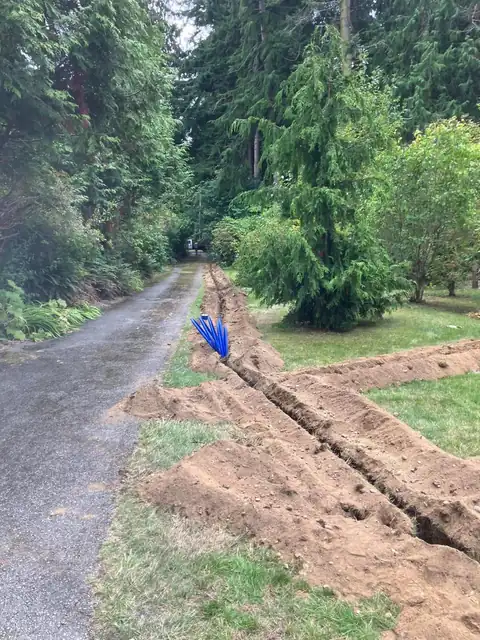
The first kind is slow. A line was trenched across the drive years ago, the trench was dumped full and never compacted, and the gravel over it has been settling a little every winter since. It's annoying, it isn't dangerous, and once the backfill finishes consolidating it stops. A few yards of gravel fixes the surface.
The second kind is active. A spot that was fine last month is soft now, or dropped several inches after a storm, or opened into a hole. Something is moving soil out from under it right now. That needs diagnosing, not filling.
Leaking line or collapsed drain?
The meter test separates them. Everything closed, low-flow indicator watched, house isolated: movement means a pressurized line is losing water, and the sunken spot is where that water has been carrying soil. Acoustic locating then finds the break, which may be directly under the dip or well up the line. No meter movement means the water is gravity flow: a downspout line, a yard drain, a footing drain outlet or an old septic component, which we trace, flow-test and probe to find.
Timing is another clue. A spot that sinks after rain and firms up in dry weather is a drain. One that stays soft in August is a pressurized leak or a well line.
What to do right now
- Mark the spot with a cone or a chair and keep vehicles off it.
- Do the five-minute meter test.
- Don't fill it.
- Note when it appeared and whether it's growing.
- Call a crew that can locate, excavate and repair in one visit.
The repair
Whatever the cause, the fix is the same shape: open the ground at the cause, repair the line or replace the failed drain, bed the pipe in clean gravel, and backfill the excavation and the washed-out void in compacted lifts so the surface stays put. On a paved drive that means a cut and a patch at one spot; on gravel it means re-grading and topping up. If the line has failed before, this is the moment to talk about replacing it on a route that avoids the driveway.
Written by the crew at 360 Leak Finders
We locate, excavate and repair buried water lines and exterior drains across Kitsap County, 24 hours a day. If this guide raised a question about your property, call (206) 354-9906.