Key takeaways
- The order is stop the water, secure the area, pump, locate, excavate, repair, restore water, then backfill and document.
- Locating still comes before digging on a catastrophic break; the water surfaces where the ground allows, not where the pipe failed.
- Night work needs tripod lights, pumps with discharge routed away from buildings, and a crew that brought the excavator on the first trip.
- The morning after is about restoration and a candid note on the rest of the main.
The call
It's after 9 p.m. A resident reports water across the common lawn between two buildings and pressure dropping in the units. The manager calls. On the phone we establish: is the master meter valve accessible and can it be closed; which buildings are affected; is there a site plan; can a truck and trailer get to the area. We dispatch with pumps, lights, locating equipment and the mini excavator.
On arrival
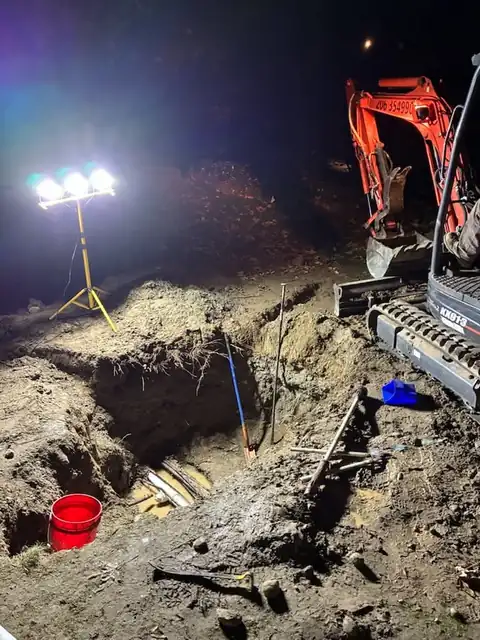
The water is stopped at the master meter or an upstream valve if it isn't already. Caution tape and cones go around the wet area and the excavation zone. Plywood goes down over the walkway residents use. The submersible pump goes into the lowest standing water with the discharge hose routed to a storm inlet or downhill away from buildings. Lights go up.
Locating under pressure
With the main briefly re-pressurized, the acoustic ground microphone and correlator find the break. On a main that has blown open the signal is loud and the locate is quick, and it matters: on a flat common lawn in till the water has surfaced over a wide area and the break could be anywhere under it. The spot is marked.
Excavation and repair
The mini excavator opens the ground at the mark, spoils on tarps. Hand tools finish around the pipe. The failure is exposed, typically a split or a failed coupling on an older main, and the pipe on either side is assessed. A buried-rated repair goes in, the main is pressure checked, and water is restored to the buildings. On most breaks that happens the same night.
The morning after
Bedding, backfill in compacted lifts, grading, and the lawn or beds restored. The tape comes down. The manager gets a written description with photos: what failed, where, what was done, and an honest note on whether the rest of the main is the same age and material. That note is what the board needs for the replacement conversation.
Written by the crew at 360 Leak Finders
We locate, excavate and repair buried water lines and exterior drains across Kitsap County, 24 hours a day. If this guide raised a question about your property, call (206) 354-9906.